




Beating the Early Freeze Warning
Sudden temperature drops can turn a dream rig into a costly repair nightmare overnight. When an early freeze warning hits, you need to act fast to protect your plumbing and appliances from expanding ice.
If you do not have time for a full blowout, at least drain your low-point drains and hot water heater immediately. Leaving valves open slightly can prevent copper pipes from splitting when temperatures plunge below freezing.
First-Time Winterizing: How Much Pink Stuff Do I Need?
A common question for beginners is how much RV antifreeze to buy. For a standard 25-to-30-foot travel trailer, you will typically need about 2 to 3 gallons of propylene glycol (the pink stuff) if you use a water heater bypass kit.
If you plan to fill your entire freshwater system directly without a bypass, that number jumps to 5 gallons or more. Always buy an extra gallon just to pour down the sink and shower traps for peace of mind.
- Bypass your water heater to avoid wasting expensive antifreeze.
- Drain the fresh water tank and low-point lines completely.
- Use a water pump converter siphon kit to draw the pink stuff directly into your lines.
- Open each hot and cold faucet one at a time until you see bright pink fluid flowing steadily.
- Pour a cup of antifreeze into every drain trap, including the toilet bowl.
Tire Care and Storage Yard Realities
Your tires take a massive beating sitting in one spot all winter. UV rays and freezing ground temperatures degrade rubber rapidly, leading to dangerous dry rot.
Inflate your tires to maximum pressure before storing, and use tire covers to shield them from the elements. If you keep your trailer in a storage yard, be sure to check on it periodically. Stories of storage yards moving trailers without notice are common, so verify their policy on keys, tongue locks, and moving your rig.
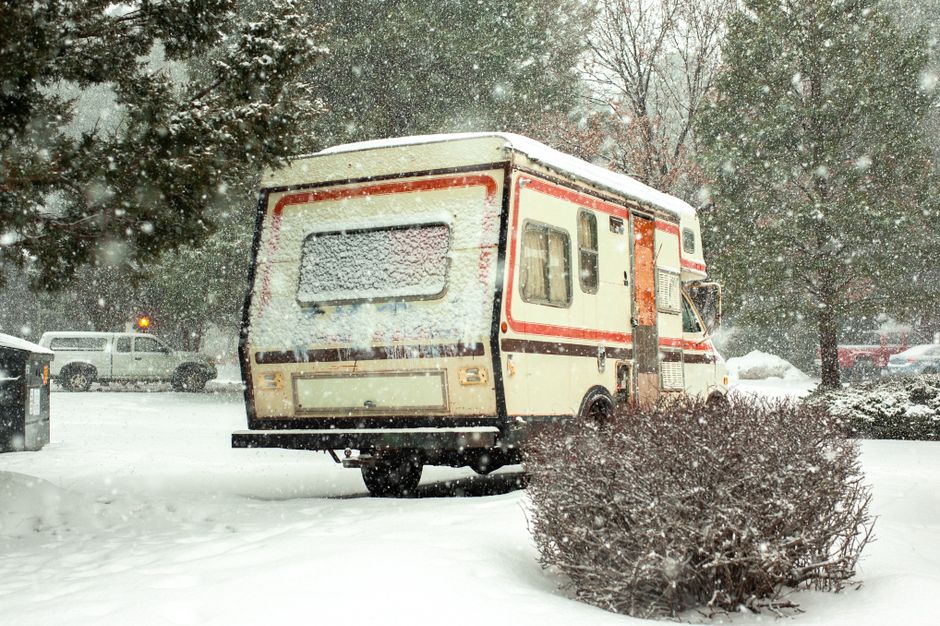
Covered Storage vs. Outdoor Exposure
Deciding between open-air storage and a covered structure comes down to your budget and climate severity. Covered storage protects your roof seals from harsh snow loads, hail, and damaging UV rays.
If you must use an outdoor cover, invest in a breathable, multi-layer fabric model designed specifically for RVs. Cheap blue tarps trap condensation, creating a breeding ground for mold and mildew over the long winter months.