




To Winterize or Not to Winterize?
If you live in a climate where temperatures drop below freezing, complete winterization is not just recommended—it is essential. Neglecting your water lines, tanks, and water heater can lead to thousands of dollars in burst pipes and component damage.
If you are a first-timer wondering about the infamous "pink stuff," you generally need about 2 to 3 gallons of RV antifreeze to adequately flush your lines. Always ensure you are using non-toxic RV-specific antifreeze, never automotive coolant.
Protecting Your Investment: Tires and Storage
The Tire Strategy
Tires are often the most overlooked part of winter storage. If possible, park your RV on a surface like concrete or asphalt, and place moisture barriers like pressure-treated wood or rubber mats under the tires to prevent dry rot and moisture absorption.
Consider using tire covers to protect the rubber from UV degradation, even during the shorter winter days. If you're storing for the full season, keeping them inflated to the recommended pressure is vital to prevent flat spots.
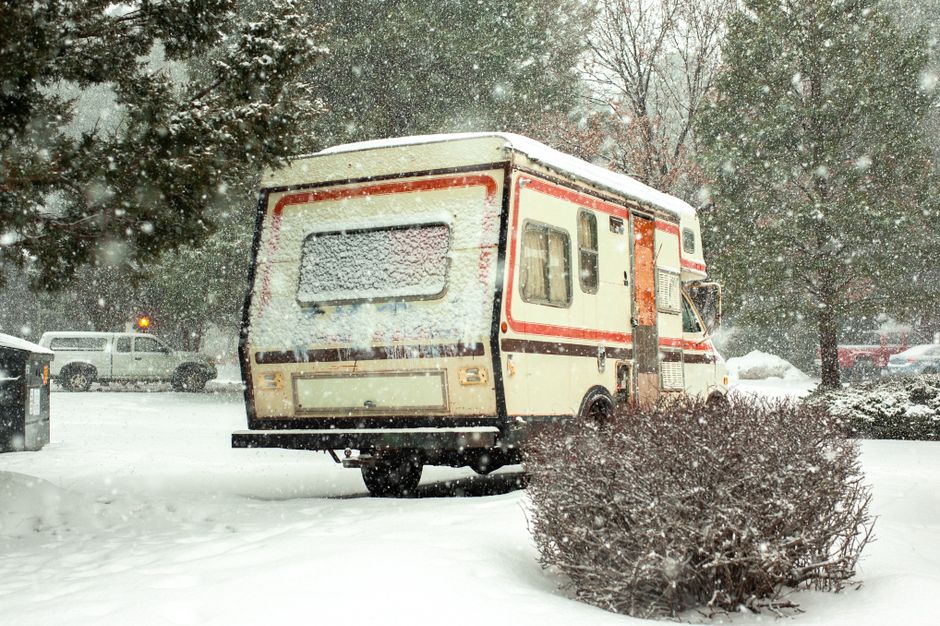
Covered vs. Outdoor Storage
When choosing between outdoor lots and indoor or covered buildings, consider the local climate. Covered storage protects your roof seals from heavy snow loads and ice dams, which are primary causes of roof leaks come spring.
If you are looking for secure places to keep your rig, check out options like [Whispering Pines RV Park](/park/whispering-pines-rv-park), which offers accessible space for off-season storage. Being in a managed facility often provides better security and monitoring than a random lot.
Early Freeze Preparation Checklist
- Drain all holding tanks, including the fresh water, grey, and black tanks.
- Bypass the water heater and drain it manually to prevent freezing.
- Use a blowout plug with an air compressor to remove excess water from lines before adding the antifreeze.
- Close all vents and windows securely to keep out rodents and pests.
- Remove all batteries or put them on a trickle charger if left inside to prevent cell death.