




Navigating Your First RV Winterization
Preparing your motorhome or travel trailer for the off-season can feel overwhelming, especially if it is your first time. Whether you bought a Class A like an HR Admiral or a compact pull-behind, the core principles of protecting your investment remain the same. Acting before the first hard freeze hits is the single best way to avoid cracked pipes and costly repairs.
A common question among beginners is: how much pink stuff (RV antifreeze) do I actually need? For most standard motorhomes and large travel trailers, you will want to have about 2 to 3 gallons of non-toxic RV plumbing antifreeze on hand before you begin blowing out your lines and pumping the system.
- Drain your fresh, gray, and black water holding tanks completely.
- Bypass your water heater to avoid filling the tank with antifreeze unnecessarily.
- Blow out the remaining water in the lines using compressed air at a low PSI (around 30-40 PSI).
- Pump RV antifreeze through every faucet, shower, and toilet until you see clear pink fluid flowing.
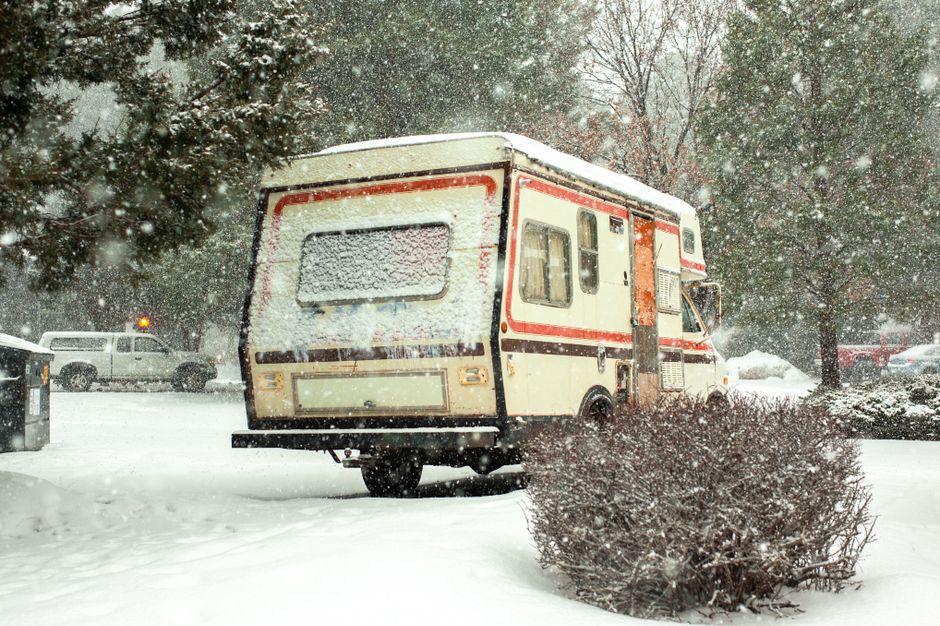
Tire Protection and Outdoor Storage Realities
Your RV tires bear the heavy brunt of stationary storage. Sitting for months in sub-freezing temperatures or damp ground can cause premature dry rot and flat spotting. To extend the life of your tires, inflate them to the maximum recommended pressure before parking, and use heavy-duty tire covers to block out damaging UV rays if stored outdoors. Placing rubber mats or wooden boards underneath the tires can also create a barrier against moisture seeping up from frozen ground.
When deciding where to keep your rig, you generally have three choices: open-air lots, covered storage, and indoor climate-controlled facilities. Covered storage is a massive upgrade over open lots because it shields your roof membranes, seals, and decals from heavy snow loads, ice accumulation, and harsh sun exposure, drastically reducing the risk of winter leaks.

Addressing Heating Under the Trailer and Early Freezes
If you are living in your RV through the winter or trying to figure out if complete winterization is truly necessary, you have to think carefully about ambient temperatures. Heating under your trailer using skirting and a safe space heater or radiant heat bulb is a popular strategy for mild winter regions, but it is not a foolproof substitute for full winterization during deep freezes. If temperatures drop unexpectedly overnight, unheated underbellies and exposed PEX lines are prime targets for sudden bursts.
If an early freeze warning is issued and you haven't finished winterizing yet, at least disconnect your external hoses, open your low-point drains, and keep your interior cabinet doors open so ambient heat can reach the plumbing lines against exterior walls. Long-term storage always wins over temporary quick fixes when winter settles in for good.