



To Winterize Completely or Not?
One of the most common debates among RV owners as temperatures drop is whether complete winterization is actually necessary. If you live in an area where temperatures consistently drop below freezing, skipping this step can lead to disastrously burst pipes and costly plumbing repairs.
First-time RVers often wonder how much antifreeze they need. Generally, a standard travel trailer requires about 2 to 3 gallons of RV-safe pink antifreeze to thoroughly flush the system, though larger motorhomes might need 4 or more. Always use the blowout plug method with an air compressor first to clear out excess water before pumping the pink stuff through your lines.
Quick Winterization Checklist
- Drain all holding tanks, including the fresh water, grey, and black tanks.
- Bypass the water heater to avoid wasting gallons of antifreeze.
- Pump non-toxic RV antifreeze through every faucet, shower, and toilet.
- Pour a cup of antifreeze into every drain trap to protect the P-traps.
Tire Care and Ground Protection During Storage
Your RV tires bear the brunt of weight and environmental degradation while sitting idle for months. Leaving tires parked directly on cold, wet ground or asphalt accelerates dry rot and cracking. Furthermore, flat spots can develop when the vehicle sits stationary in sub-freezing weather.
To protect your investment, inflate tires to their maximum recommended pressure before storing. Park the rig on level, well-drained surfaces using plastic or rubber tire ramps to keep them off frozen mud or snow. Using opaque tire covers protects the rubber from damaging UV rays, even during the winter months.
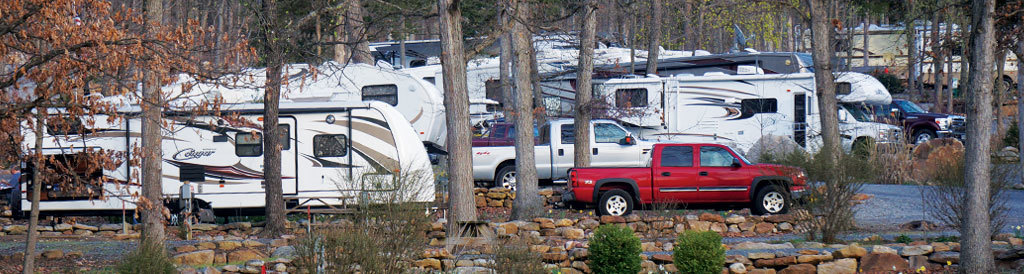
If you plan on changing your storage spots for better convenience or security, consider facilities that offer paved pads. Destinations like Caverns RV Park provide great environments to set up your rig properly, whether you are staying through the shoulder season or prepping for long-term storage.
Heating Under the Trailer and Storage Options
Many RVers ask if running a heater under the trailer in winter is a good idea to prevent freezing. While skirting your RV and placing a small, certified enclosed-space heater underneath can help in mild freezes, it introduces a severe fire hazard if left unattended. It is always safer to rely on proper interior winterization rather than makeshift under-rig heating solutions.
When deciding between open-air lots, covered storage, or fully enclosed indoor units, weigh your budget against weather risks. Covered storage offers fantastic protection against heavy snow loads, ice accumulation, and damaging winter sun without the premium price tag of a fully enclosed garage.
- Evaluate your local climate and choose covered storage if heavy snow is frequent.
- Remove all food items and pantry goods to deter rodents and pests.
- Prop open refrigerator and freezer doors to prevent mold and mildew growth.
- Disconnect all batteries and store them in a temperature-controlled area on a trickle charger.

Taking these preventative measures ensures your motorhome or travel trailer remains in top-tier condition. Come spring, you will be able to hit the road without unexpected repair bills holding you back.