




Navigating Your First Winterization: Fluids and Pink Stuff
If this is your first time winterizing, the biggest question on your mind is usually: how much pink stuff do I actually need? For most standard travel trailers and motorhomes, buying a three-to-four pack of RV antifreeze is the safe baseline to thoroughly clear out your lines.
If you plan to use an air compressor to blow out the lines first, you can often get away with just two to three gallons. However, pouring a cup or two directly into each drain trap to protect your P-traps is an absolute must.
- Bypass your water heater before pumping any antifreeze to save gallons of fluid.
- Always use non-toxic RV/marine antifreeze (propylene glycol), never automotive coolant.
- Don't forget to run the outdoor shower, ice maker line, and washing machine supply if applicable.
Tire Care and Storage Spot Decisions
Leaving your tires sitting flat on frozen ground or snow for months is a recipe for premature dry rot and sidewall cracking. If you are changing storage spots or parking long-term, make sure to inflate your tires to their maximum recommended PSI before locking up.
Using tire covers protects the rubber from damaging UV rays even in winter. Additionally, place rubber mats or plastic leveling blocks under each tire to create a barrier between the cold ground and your rubber.
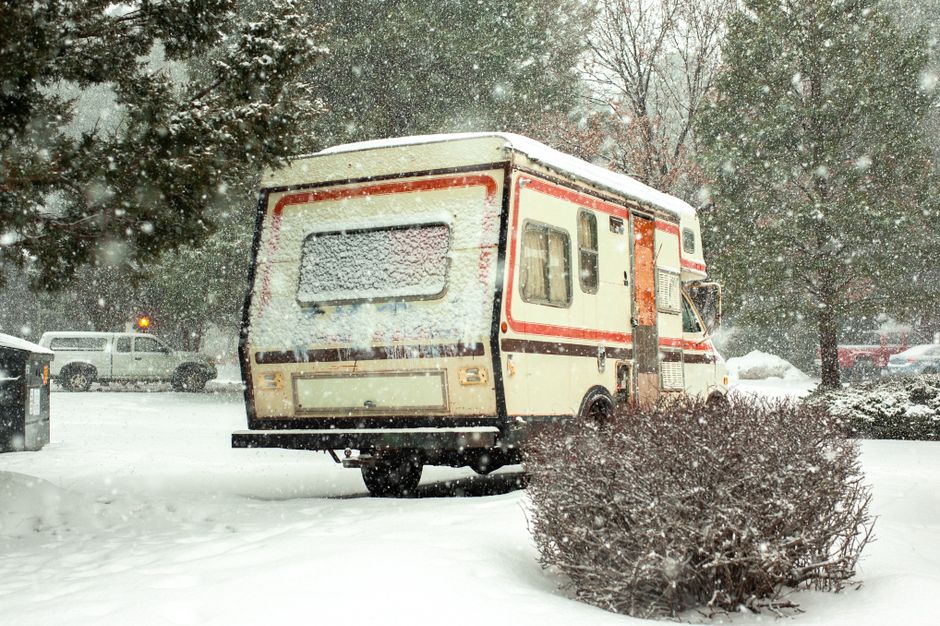
Covered vs. Uncovered Outdoor Storage
Covered storage is the gold standard, shielding your roof seals and AC shrouds from heavy snow loads and ice dams. If you are using a custom RV cover, ensure it is breathable to prevent trapped condensation and mold growth over the winter months.
The Great Debate: Heating Under the Trailer and Early Freezes
When an unexpected early freeze warning hits, panic can set in. Many owners wonder if placing a space heater or trouble light underneath the trailer is a good idea to keep underbelly pipes from freezing.
While supplemental heat can help in mild drops, leaving unattended space heaters running in uninsulated underbellies poses a severe fire hazard. Complete winterization is always the safest route, rendering temporary heating tricks unnecessary.
- Monitor local weather reports closely during late autumn transition weeks.
- Keep a portable air compressor and a couple of gallons of pink antifreeze ready for sudden cold snaps.
- If you choose not to fully winterize, ensure skirting is tightly sealed and heat tape is properly rated for pipes.