




Beating the Freeze: Early Preparation and Complete Winterization
When an early freeze warning hits your local forecast, panic can set in quickly. Whether you are prepping a brand new 2023 Bay Star 3408, a cozy Sunset Park Travel Trailer 16bh, or a classic motorhome, ignoring freezing temperatures is a costly gamble. Complete winterization is not just a suggestion; it is a critical step to prevent frozen pipes, cracked holding tanks, and devastating water damage that can ruin your next camping season.
Many first-time RV owners wonder how much RV antifreeze they actually need to buy. As a rule of thumb, always keep at least two to three gallons of non-toxic RV pink antifreeze on hand for a standard travel trailer, while larger motorhomes with washing machine hookups or multi-zone plumbing may require four to six gallons. Combined with the blowout plug method using an air compressor, this ensures every droplet of water is expelled from your lines before the deep freeze sets in.
Protecting Your RV Tires During Extended Storage
Tires are one of the most expensive investments on your rig, and letting them sit unprotected all winter long invites premature dry rot and flat spots. If your motorhome or travel trailer is parked on concrete, asphalt, or even gravel, the cold ground can quickly sap moisture and integrity from the rubber.
- Inflate all tires to their maximum recommended cold pressure before storage to help combat pressure drops as temperatures plunge.
- Use opaque tire covers to shield the rubber from harsh UV rays and winter elements, especially if stored outdoors.
- Place rubber, vinyl, or plywood leveling pads beneath each tire to create a barrier between the rubber and cold, damp ground.
- Avoid parking in areas prone to standing water or melting snow that can submerge portions of the tread.
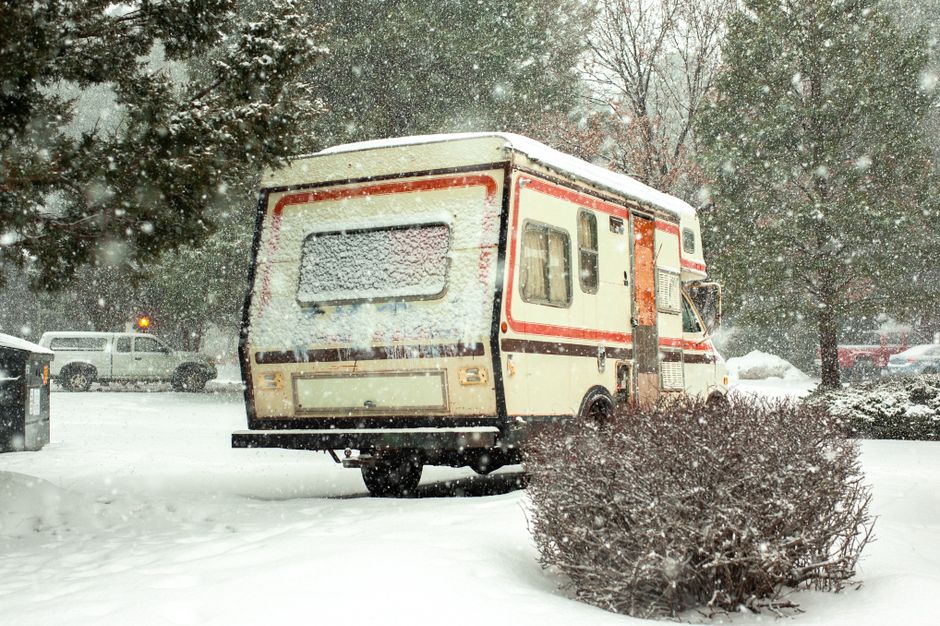
Managing Winter Waste Water and Interior Moisture
Residual moisture is the silent enemy of stored RVs. Even after blowing out your water lines and pumping pink stuff through the traps, wastewater tanks need special attention. Completely dump, flush, and sanitize your black and grey water tanks before storage. Leaving any wastewater behind can lead to foul odors, frozen residue, and warped tank valves.
Inside the cabin, place several moisture-absorbing containers or electric dehumidifiers if shore power is accessible. Crack roof vents slightly using max-air covers to allow stale air to circulate without letting snow or rain inside. Taking these simple steps ensures that when spring finally arrives, your home-on-wheels will be fresh, dry, and ready for the open road.