



First-Time Winterizing Essentials: How Much Antifreeze Do You Need?
Stepping into winterization for the first time—whether you're prepping a newer rig like a 2023 Bay Star 3408 or an older motorhome—can feel daunting. The most common question among first-timers is simple: how much pink RV antifreeze do I actually need?
For most standard Class A or large Class C motorhomes, you will want to have between 2 to 3 gallons of propylene glycol (RV-specific pink antifreeze) on hand if you are using an onboard water heater bypass kit. If you plan to fill your entire system directly without a bypass, or if you have a massive residential-sized plumbing setup, you might need up to 4 or 5 gallons to be completely safe.
- Always buy one extra gallon than you think you need to account for P-traps and accidental spills.
- Never use automotive antifreeze (ethylene glycol), as it is highly toxic and will ruin your potable water lines.
- Verify that your water heater bypass valves are securely closed before pumping.
Tires, Covers, and Early Freezes: Protecting the Exterior
When storing your motorhome for the off-season, your tires take the brunt of the environmental stress. Sitting in one spot all winter leads to flat-spotting and UV degradation, especially if parked on concrete or asphalt without protection.
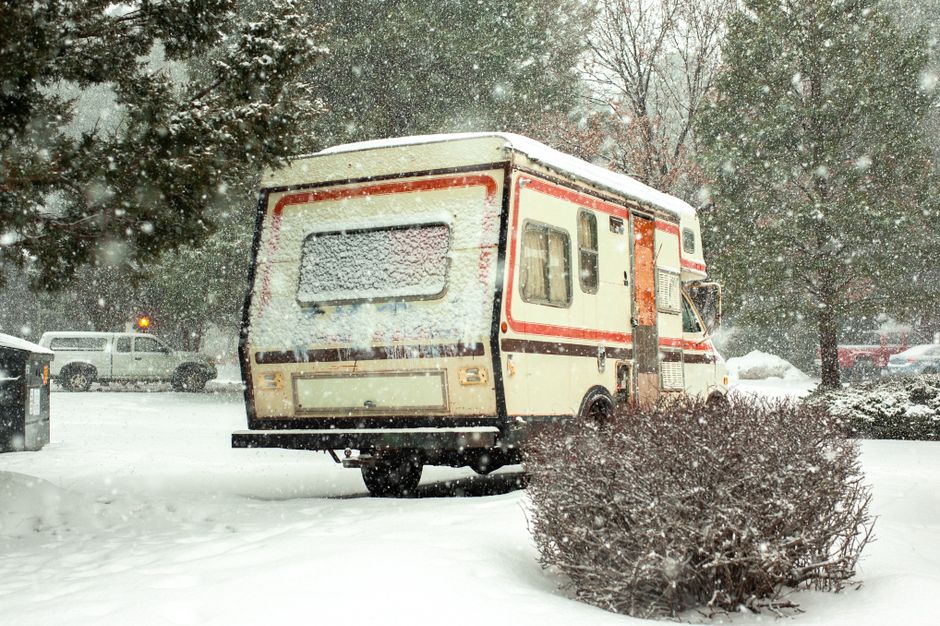
If you are facing an early freeze warning tonight and haven't finished your full winterization process, act fast. At a minimum, open your low-point drains, turn on your water heater bypass, and blow out the lines with compressed air if you have a blowout plug available. This quick emergency measure can save you thousands in cracked plumbing lines.
- Inflate tires to their maximum recommended PSI before parking to minimize flat spots.
- Use tire covers to shield rubber from harsh winter UV rays and snow accumulation.
- Place rubber mats or wood boards beneath tires to act as a thermal barrier against frozen ground.
Covered Storage vs. Outdoor Exposure
Choosing where to park your rig is just as important as how you winterize it. Covered storage provides immense benefits by keeping snow, ice, tree sap, and heavy UV rays off your fiberglass roof and sidewalls. This drastically reduces the risk of roof seal degradation and subsequent water leaks during spring thaw.
If indoor or covered storage isn't within your budget, a breathable, high-quality RV cover is an absolute must. Avoid cheap plastic tarps, which trap moisture and flap violently in winter winds, scratching your clear coat and creating micro-tears. Secure your cover tightly with weighted straps to ensure it survives the winter gales.