



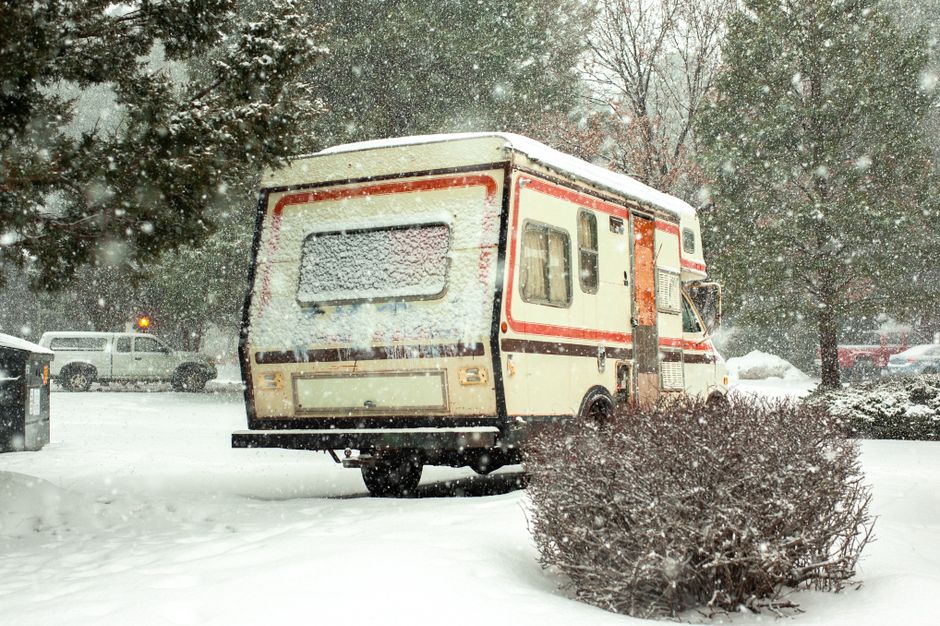
To Winterize or Not: Is It Necessary?
If you live in a region where temperatures regularly dip below freezing, winterizing is not optional; it is a necessity. Even a single night of a deep freeze can cause catastrophic damage to your plumbing system, as stagnant water expands and bursts pipes.
Many first-time owners ask, "How much pink stuff do I need?" A good rule of thumb is to have at least 2-3 gallons of RV-specific non-toxic antifreeze on hand. It is always better to have an extra gallon than to run out halfway through the process.
Best Practices for Motorhome Storage
Whether you choose covered storage or an open lot, your primary goal is to protect your roof and tires from the elements. Covered storage is the gold standard, as it prevents snow accumulation and UV degradation.
Don't Neglect Your Tires
Tires can dry rot faster when sitting stationary in extreme cold. If possible, park on a surface that doesn't hold moisture, like gravel or concrete, and use tire covers to shield them from sunlight. Consider using jack stands to take the weight off the suspension if you plan on storing for several months.
Early Freeze Preparation
If an early freeze warning hits tonight, don't panic. If you cannot fully winterize immediately, disconnect your water hose and open your low-point drains to let water gravity-drain out. Turning on your furnace to a low setting or placing a safe, dedicated RV heater inside the coach can provide just enough ambient warmth to protect your plumbing lines in a pinch.
